Today felt like a real beginning.
Not a grand beginning, not a resolved one — but the kind I trust most: cloth on a table, samples shifting around under my hands, colours finding each other before they know what they mean.
I started laying out the Harris Tweed pieces I’ve gathered for this new body of work, and almost immediately the project moved from abstraction into surface. Until now, so much of this VACMA period has been about walking, mapping, reading, noticing. Routes. Burns. old road structures. The graveyard on Milton Road. Portobello becoming visible in layers. But fabric changes the pace of thought. Once the wool is there, the questions become more precise.
What does a shoreline feel like in tweed?
What kind of grey holds a map without becoming dead?
How much pattern can a surface carry before it stops listening?
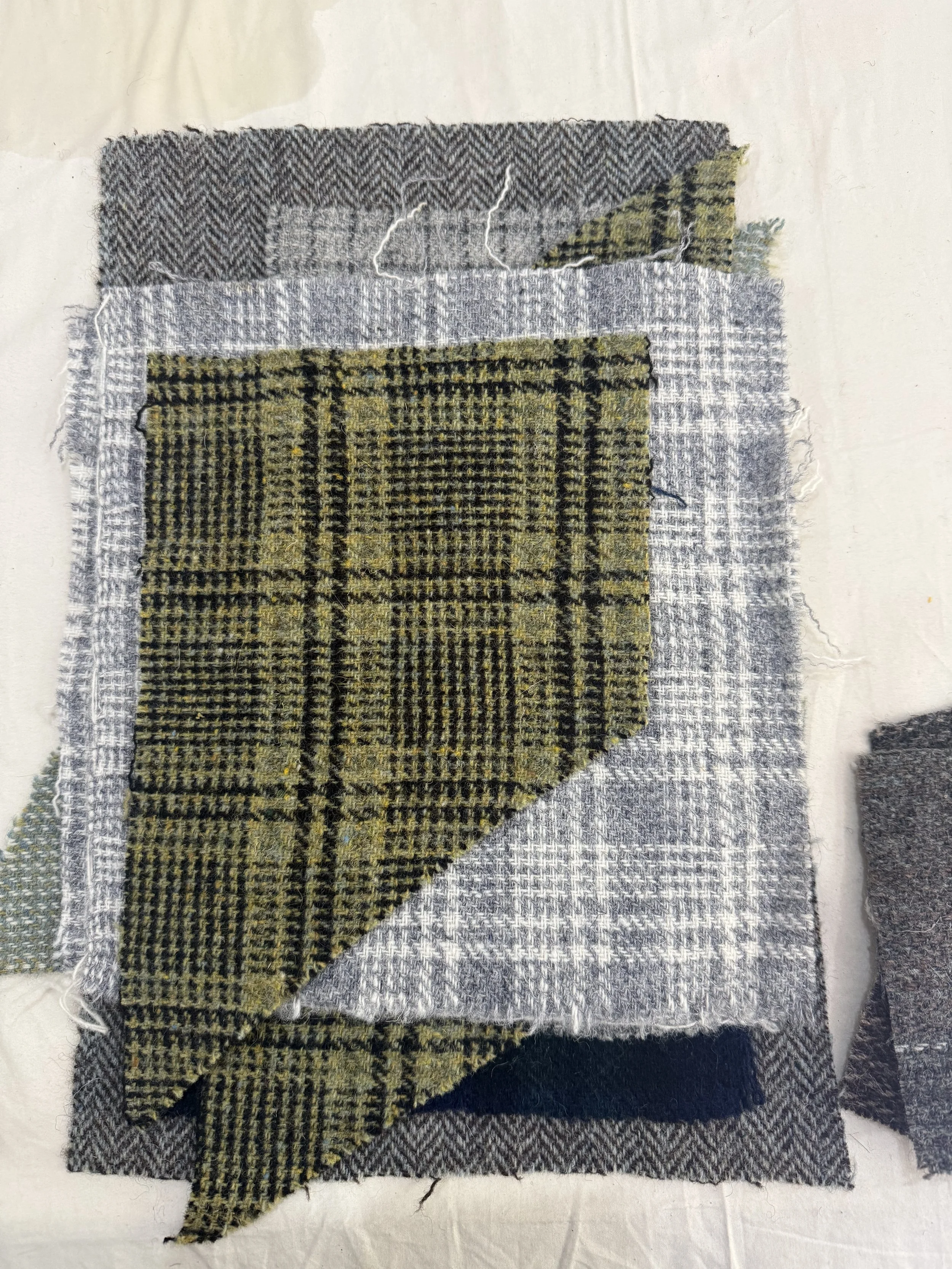
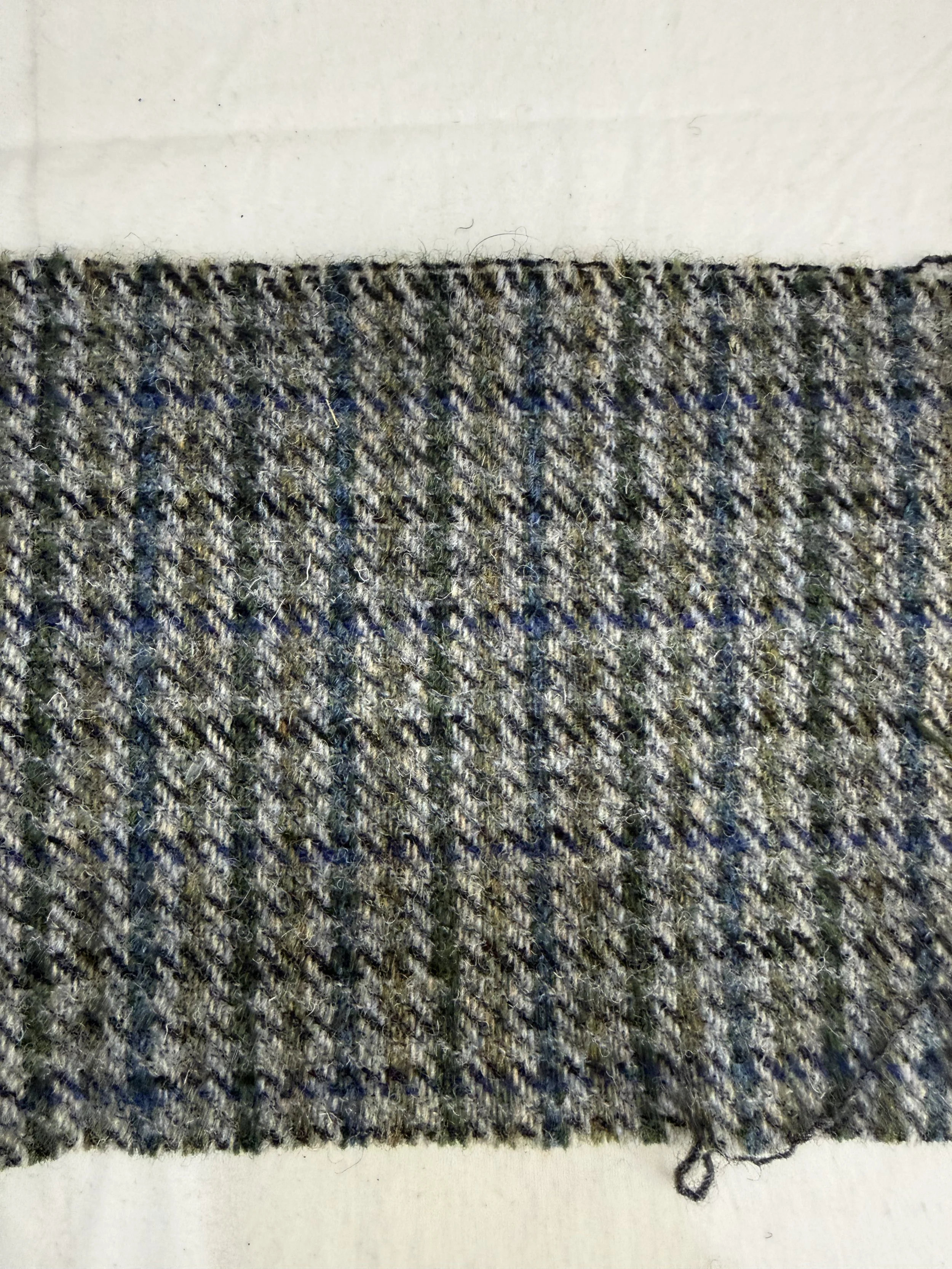
The strongest thing today was realising that not all of these samples behave in the same register. Some are structural: the sober greys, the blown herringbones, the quieter checks that can hold line, print, route, annotation. They feel like ground. Pavement. Mist. Old paper. Stone. The kinds of cloth that don’t ask to be admired, but make everything else legible.
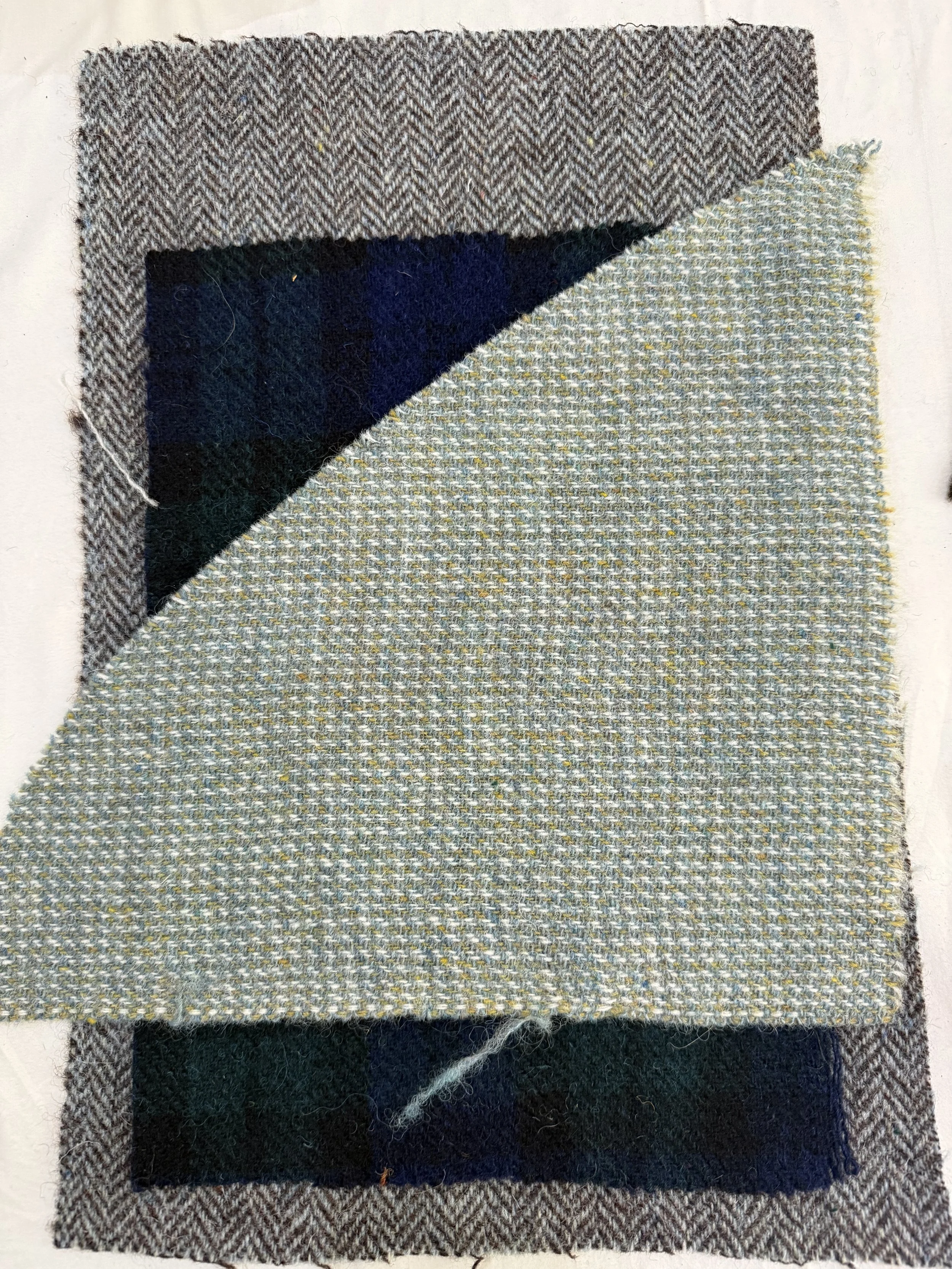
Then there are the interruptions: the mossy olive check, the deep blue-black tartan, that pale mineral cloth with flecks of yellow moving through it like weak sunlight. These feel less like “base fabrics” and more like incidents. Weather. Water. Drift. Memory entering the system.
I found myself building little temporary compositions on the table — not yet designs, more like arguments between surfaces. Grey against blue. Blue held down by herringbone. Olive crossing a pale ground at an angle. One square insisting on itself, another receding. It reminded me that patchwork, at its best, is also cartographic: one piece presses against another and suddenly a territory begins to emerge.
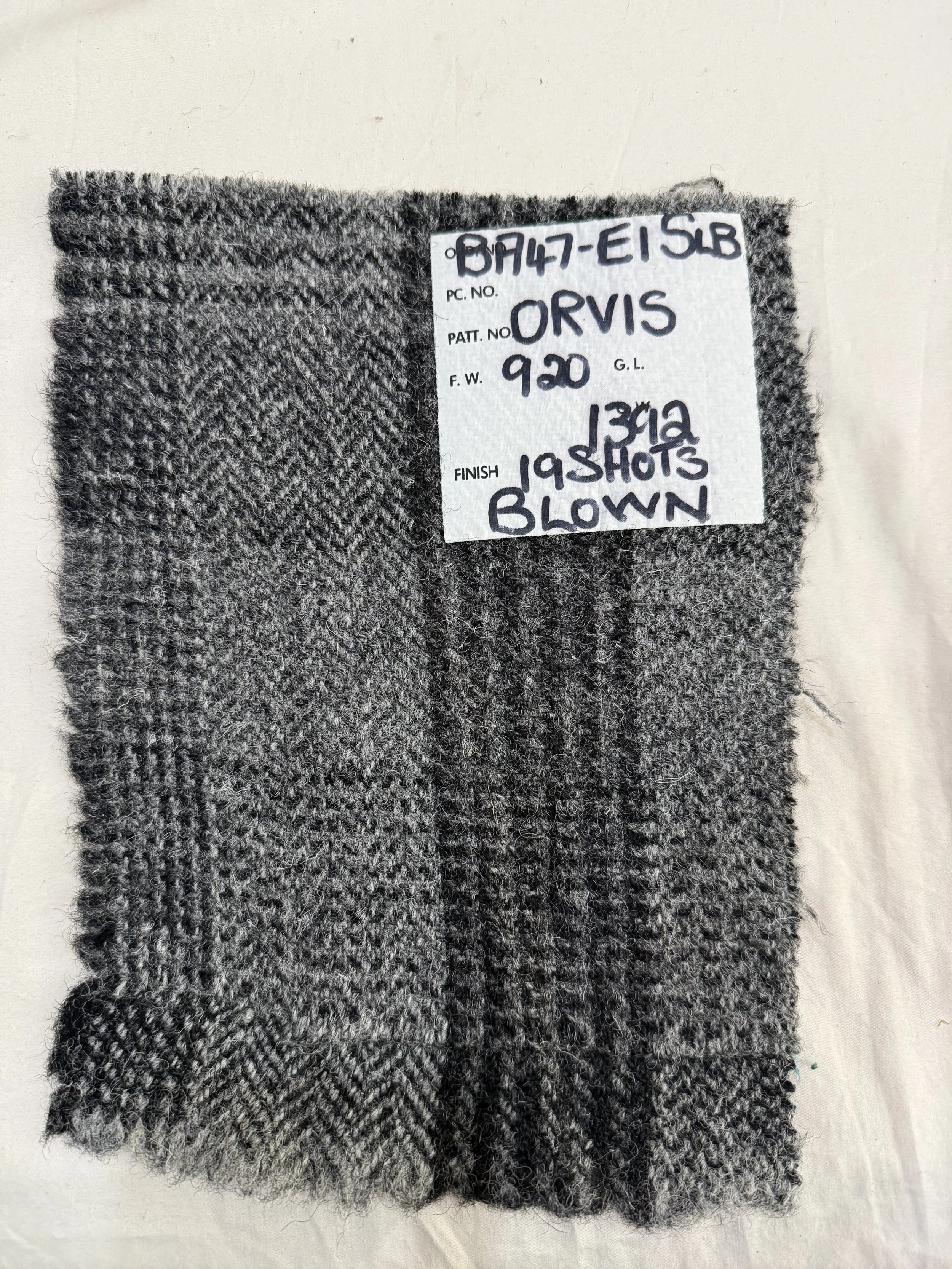
There is one grey sample in particular that I keep returning to — a blown check, marked “Orvis,” soft but graphic, almost like a map already waiting to happen. It holds multiple scales at once: from a distance, atmosphere; up close, grid. That feels important for this project. I want these works to operate similarly: readable from afar as coast, route, drift, and then, on closer looking, full of smaller decisions, crossings, tensions.
What I’m after is not “using tweed” in a decorative sense. I’m trying to understand how Harris Tweed can become a thinking surface. A material that already carries weather, labour, and structure — and that can then receive other systems: mapping, old roads, route lines, text, stitch, memory.
Today was also a reminder that colour in this project needs discipline. Portobello and Joppa are not asking me for spectacle. They are asking for tonal intelligence. Grey-browns, sea blues, mineral greens, off-whites, dark crossings. A palette that can hold coast, cemetery stone, railway logic, horizon, and the strange inwardness of the walk itself.
Nothing is fixed yet, which is exactly as it should be.
For now I’m letting the samples speak to each other. Letting the cloth propose its own geography.