
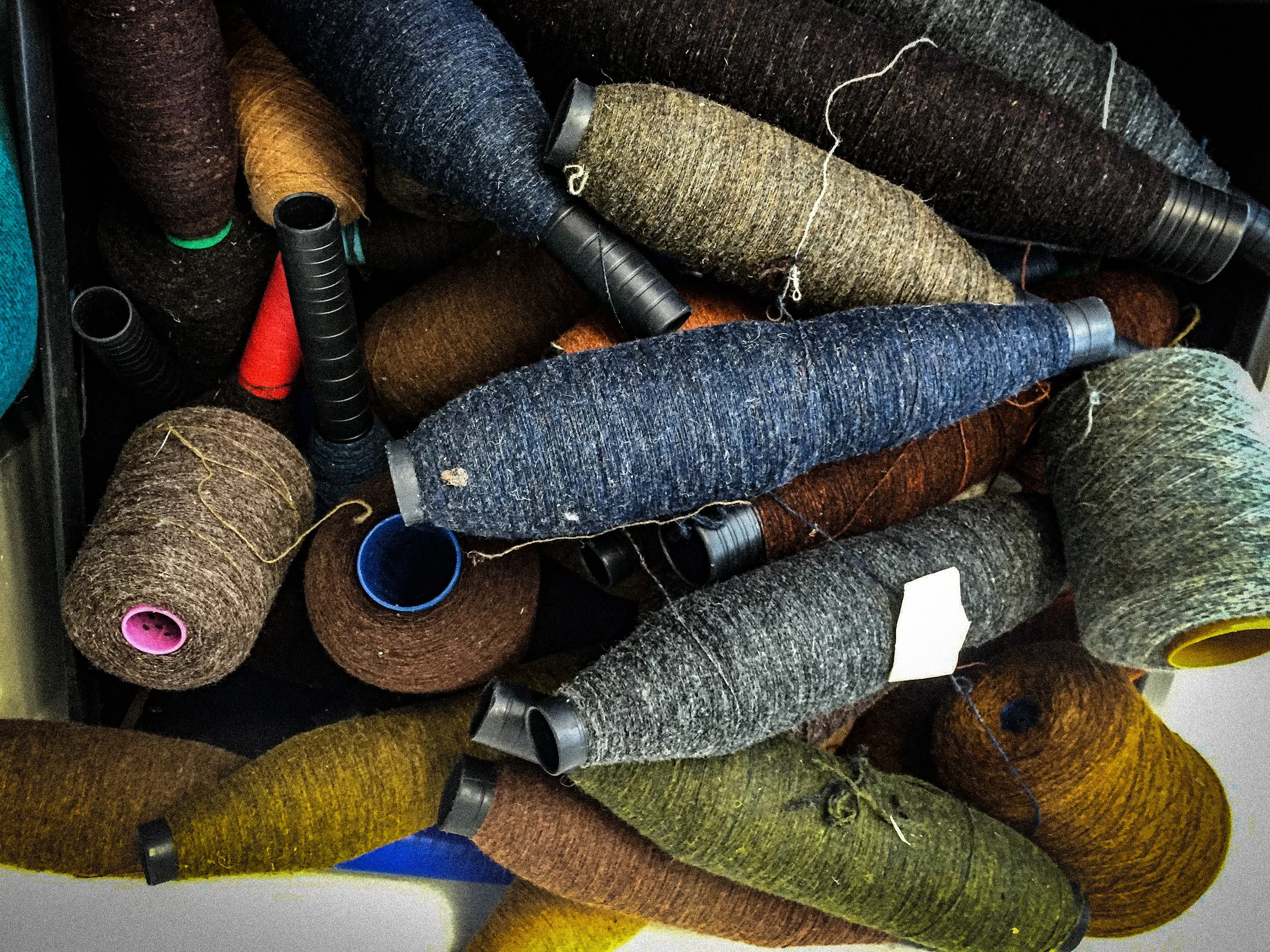
“This work is a bridge – between mountains and islands, between languages and looms, between two wool cultures that were never meant to be strangers.”- Adil Iqbal
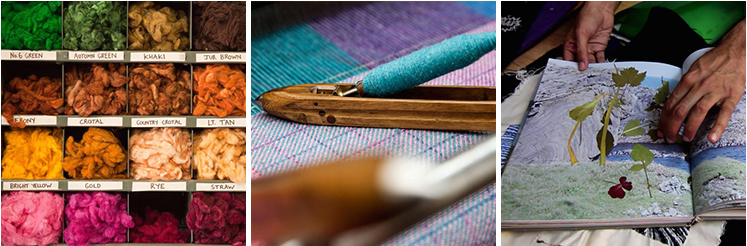
Our Story
Twilling Tweeds began with a journey into the mountains.
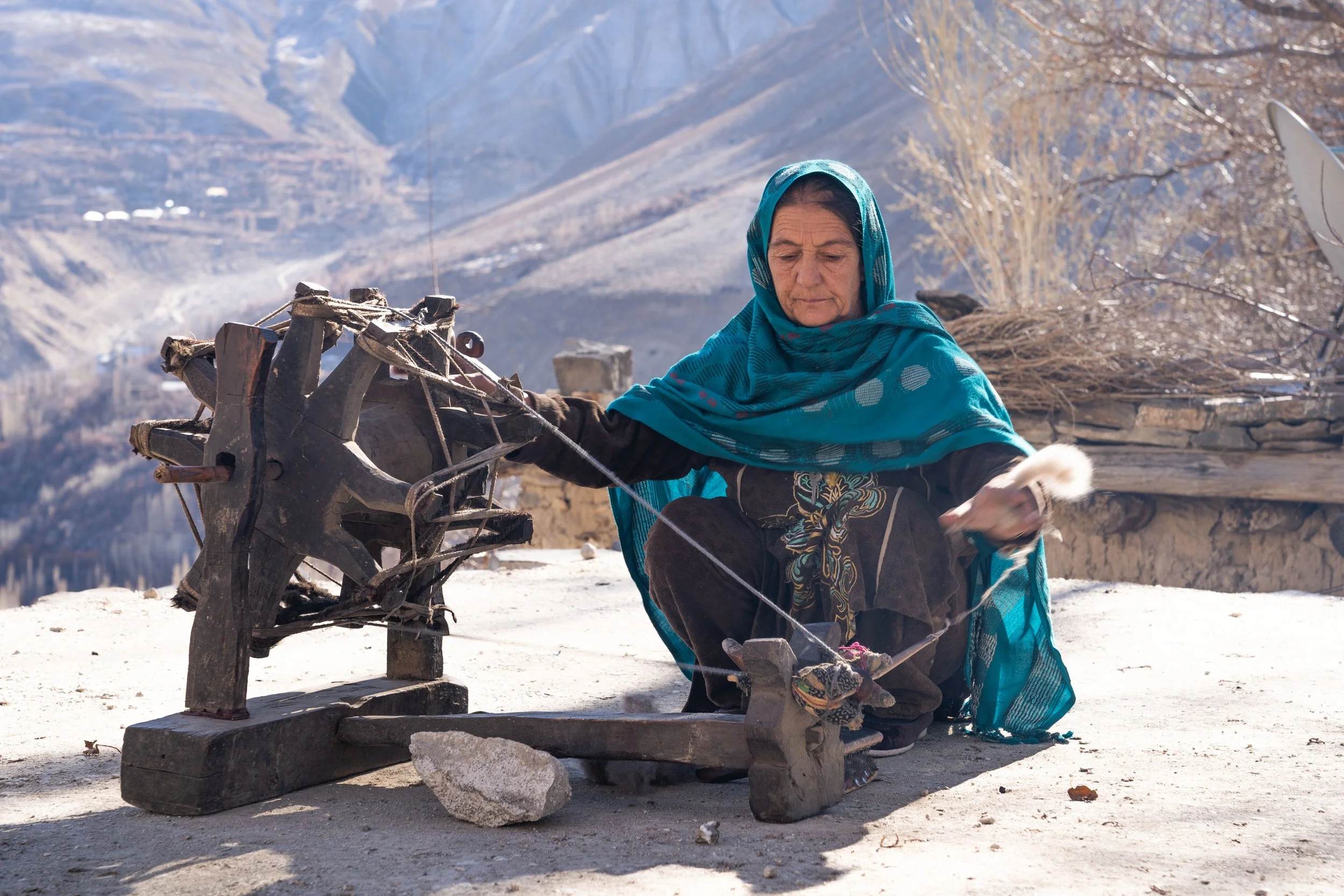
In 2011, designer and anthropologist Adil Iqbal travelled to the valleys of Chitral in north-west Pakistan to document traditional embroidery and a handwoven wool cloth known locally as shu or patti. Days were spent in kitchens and courtyards, watching women tease wool by lamplight, listening to stories rise and fall over cups of chai. The cloth was practical, beautiful, and quietly holding up entire households.
A few years later, Adil found himself on another edge of the map – in the Outer Hebrides, walking past crofts and looms weaving tweed for the global market. Here too, wool carried weather, memory and work: Atlantic wind turned into cloth; small island economies threaded together by sheep and skill.
Twilling Tweeds grew out of this conversation between two places: between shu and tweed, between mountains and sea, between women’s work in Chitral and loom sheds in Scotland.

A studio between Chitral and Scotland
Today, Twilling Tweeds is a small, wool-led studio that moves between Chitral and Edinburgh. We collaborate with artisans, shepherds, embroiderers and weavers to create textiles, tapestries and research that honour land, labour and slowness.
Our work sits in the space where design, anthropology and community meet.
We are as interested in how a piece is made – who raised the sheep, who boiled the water, who threaded the needle – as we are in the finished object.

Wool as witness
We work mostly with two mountain cloths:
Shu – a handwoven wool fabric from Chitral, washed in rivers and hot springs, spun and woven in villages that have done this for generations.
Tweed – a wool fabric from the Scottish isles, dyed, spun and woven close to home, shaped by peat, rain and Atlantic light.
It remembers where the flock grazed, which hands turned the spindle, which songs were sung at the loom. In a time of fast fashion and climate crisis, we choose wool because it stays close to land, because it can be repaired, and because it keeps local economies – and stories – alive.

Hunarmand Hoost – every finger holds a skill
At the heart of Twilling Tweeds is Hunarmand Hoost – literally, “the house of skilled hands.”
This is our name for the women’s network and artisan households in Chitral who have carried embroidery and wool work through conflict, migration and uncertainty. Many of our pieces pass through their homes: a motif drawn in the studio might travel to a village kitchen, be stitched over winter evenings, and return heavy with new meaning.
We see Hunarmand Hoost not as a “project” but as a living house – a place of dignity, income and creative authorship.
Research, archives and the future of Shu
Alongside making textiles, Twilling Tweeds also works to protect the knowledge behind them.
Between 2022 and 2024, we led a major documentation project on Shu in partnership with the Endangered Material Knowledge Programme at the British Museum, hosted by National Museums Scotland. Together with local collaborators, we filmed and recorded the full Shu process – from grazing and shearing to weaving, felting and trade – creating an open archive so that this knowledge is not lost.
This research sits alongside our design work: it informs how we source, how we pay, and how we imagine new futures for wool in both Pakistan and Scotland.
Where we are going
Twilling Tweeds is slowly growing into:
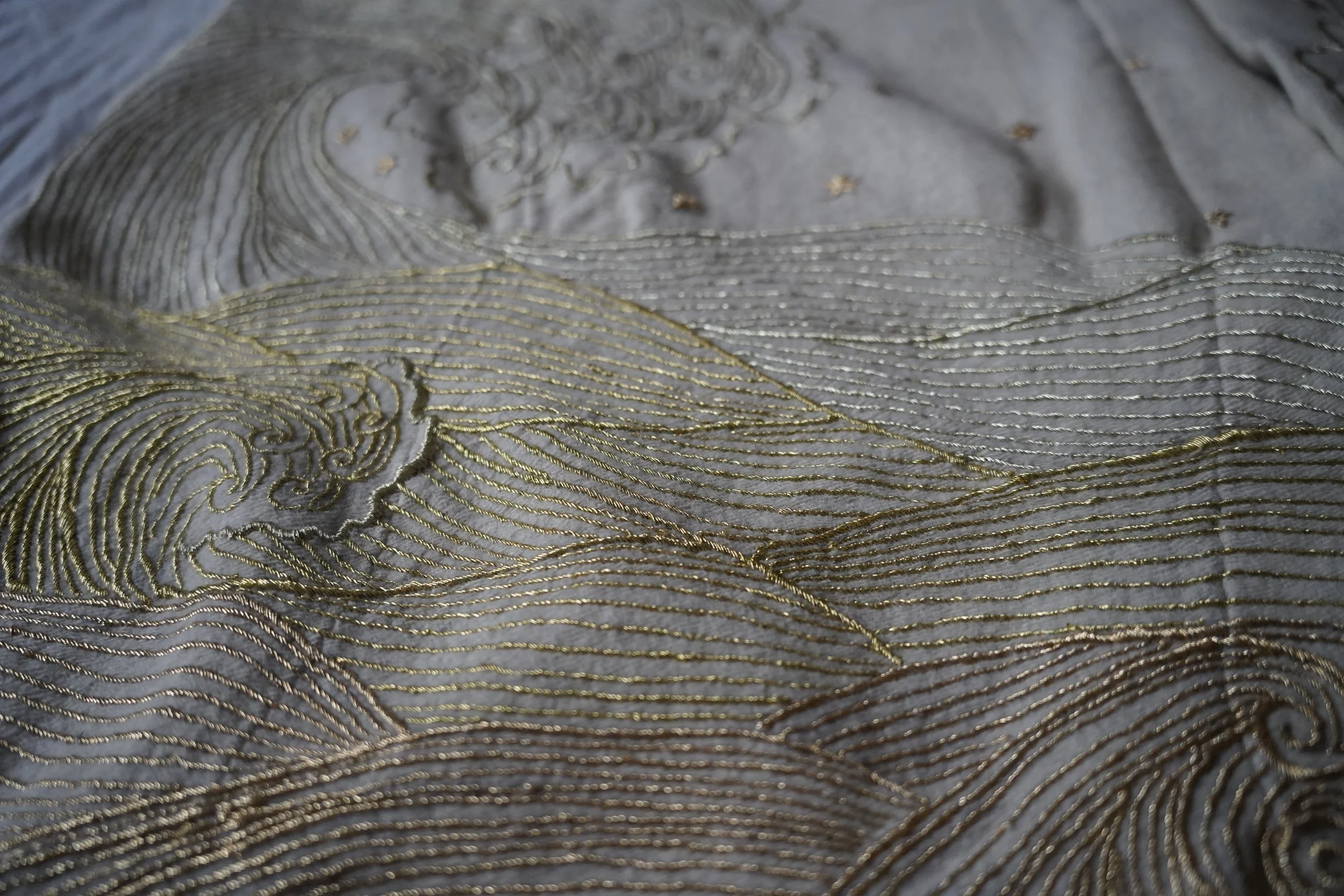
A studio for embroidered cloaks, tapestries and small editions that carry stories of land and migration.
A bridge between craft communities in Chitral and Scotland, building long-term, fair collaborations.
A listening space where wool, film, writing and workshops come together to ask:
How can we make textiles that are honest about where they come from – and generous towards where they are going?
This story is still being woven.
Thank you for reading, and for caring about the hands behind the cloth.
Quisque iaculis facilisis lacinia. Mauris euismod pellentesque tellus sit amet mollis.