Something has shifted again.
Earlier in this process, I was still thinking in terms of maps: roads, burns, coastlines, blocks, plans. Then came the tweed samples, the tracing, the first transfers. But these new studies feel like a different threshold altogether. The map is no longer sitting on top of the cloth. It is starting to behave like embroidery — slower, more bodily, less certain, and much more alive.
What I’m noticing is that stitch changes the authority of the line.
A printed or drawn map often arrives with a kind of confidence: this road goes here, this edge ends there, this space is fixed. But once translated into thread, everything softens slightly. A line thickens. A corner hesitates. A route starts to feel less like instruction and more like memory. That’s where it gets interesting for me.
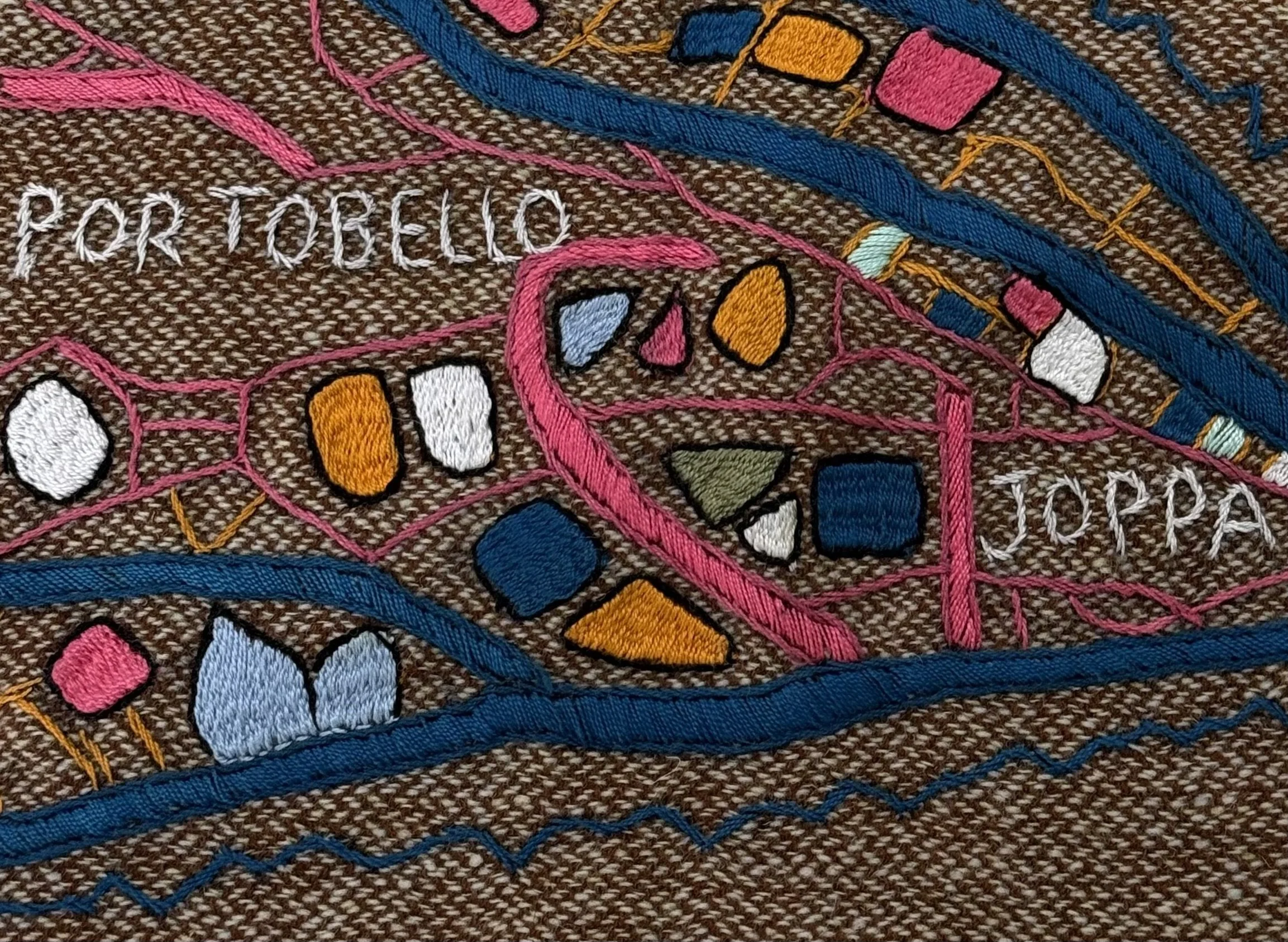
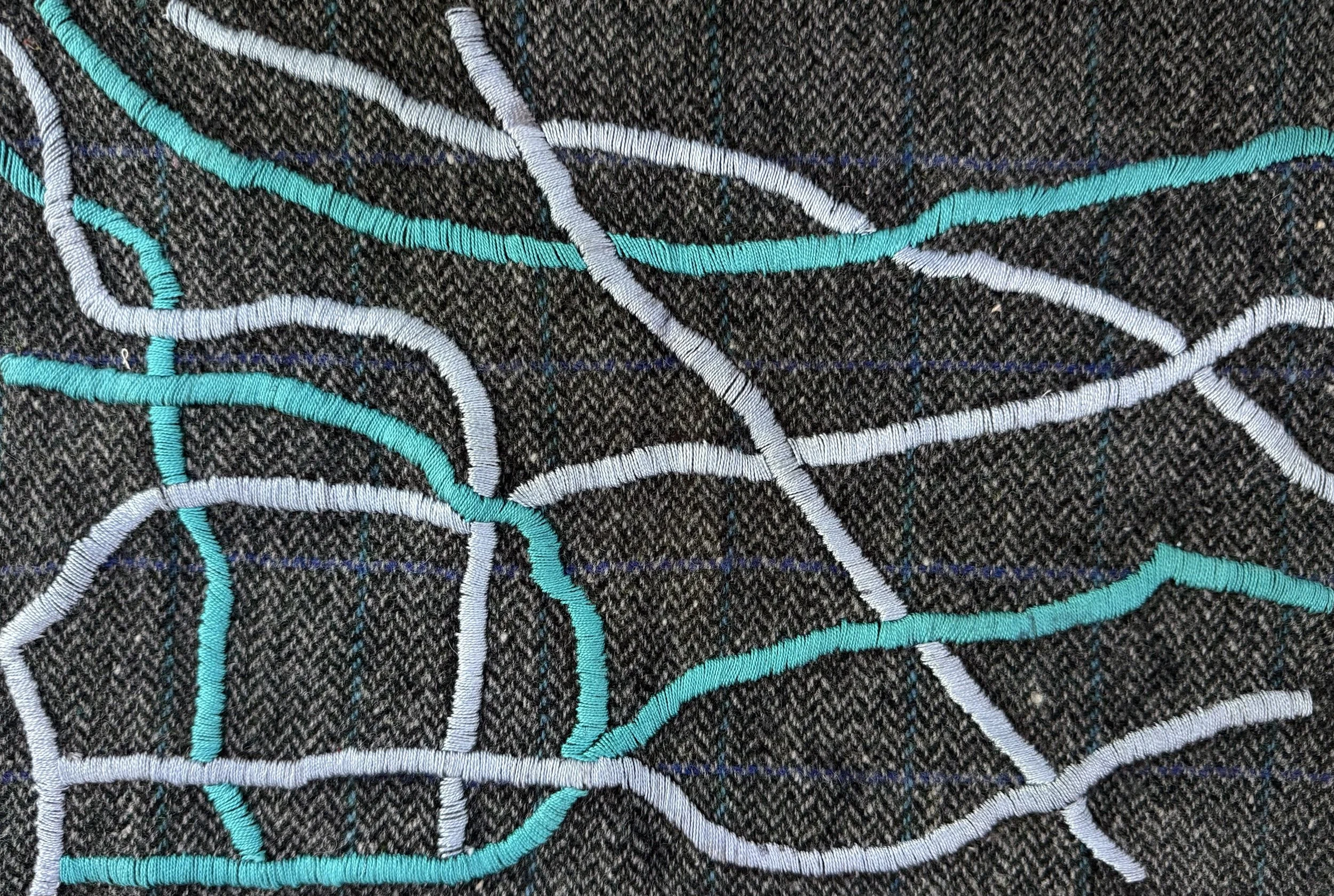
In one sample, the roads are held in pale mint and white against grey tweed, almost like a quiet urban pulse. They feel clean, modern, reduced — less about naming the city than sensing its structure. In another, the palette opens out completely: pinks, yellows, blues, soft olive, pale lettering. Suddenly the map begins to feel almost conversational, as though neighbourhoods are no longer abstract blocks but inhabited fragments — place as pattern, route as mood.
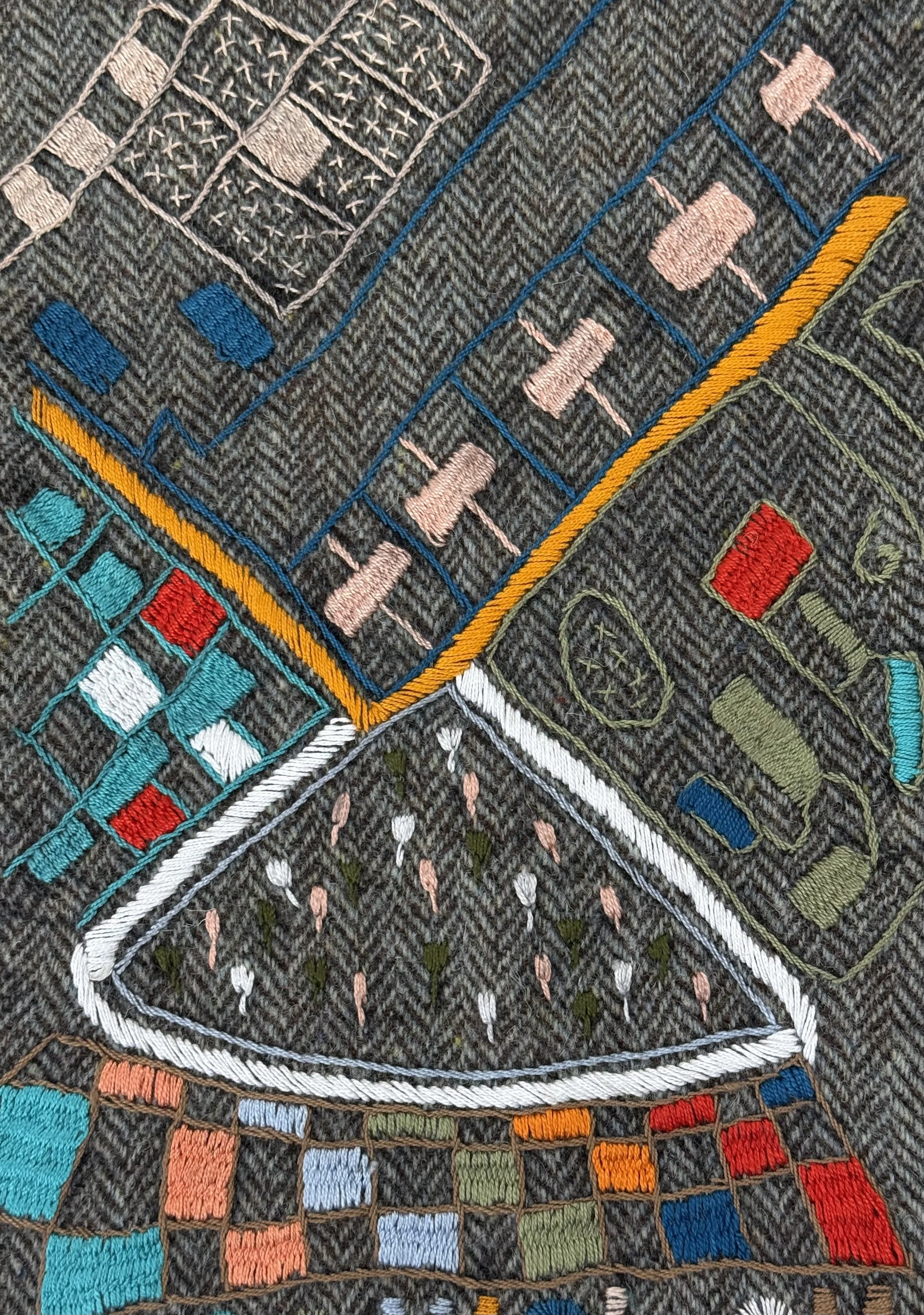
And then there’s the more composite study, where blocks of colour, stitched lines, and small contained areas begin to behave like a patchwork cartography. That one feels important. It suggests a direction where the work can hold several systems at once: street map, field structure, allotment logic, embroidery grid, and the memory of walking. Not a single map, but layered ways of knowing a place.
I’m drawn to the fact that embroidery refuses neutrality. Even the smallest colour decision changes the emotional temperature of the work. A pale blue line becomes water, or distance, or coolness. Pink reads as warmth, human presence, maybe even domesticity. White lines feel factual until they cross tweed, and then they start to resemble paths traced through mist. Stitch is never just descriptive. It always carries feeling.
That may be why this stage matters so much. I’m no longer asking only how Portobello or Joppa can be mapped. I’m asking what kind of stitched language a place demands. Does a road need to be crisp, or should it bend? Should a block be flat, or textured? Should the map explain itself, or remain slightly withholding?
I think the strongest work will live somewhere between legibility and tenderness. Clear enough to recognise as a place, but open enough to hold drift, memory, and the pressure of the hand.
These are still studies, but they no longer feel tentative. They feel like propositions.