|
Discover the Timeless Elegance of Muzafar Khan Zafar's 'Zafar Nama'͏ ͏ ͏ ͏ ͏ ͏ ͏ ͏ ͏ ͏ ͏ ͏ ͏ ͏ ͏ ͏ ͏ ͏ ͏ ͏ ͏ ͏ ͏ ͏ ͏ ͏ ͏ ͏ ͏ ͏ ͏ ͏ ͏ ͏ ͏ ͏ ͏ ͏ ͏ ͏ ͏ ͏ ͏ ͏ ͏ ͏ ͏ ͏ ͏ ͏ ͏ ͏ ͏ ͏ ͏ ͏ ͏ ͏ ͏ ͏ ͏ ͏ ͏ ͏ ͏ ͏ ͏ ͏ ͏ ͏ ͏ ͏ ͏ ͏ ͏ ͏ ͏ ͏ ͏ ͏ ͏ ͏ ͏ ͏ ͏ ͏ ͏ ͏ ͏ ͏ ͏ ͏ ͏ ͏ ͏ ͏ ͏ ͏ ͏ ͏ ͏ ͏ ͏ ͏ ͏ ͏ ͏ ͏ ͏ ͏ ͏ ͏ ͏ ͏ ͏ ͏ ͏ ͏ ͏ ͏ ͏ ͏ ͏ ͏ ͏ ͏ ͏ ͏ ͏ ͏ ͏ ͏ ͏ ͏ ͏ ͏ ͏ ͏ ͏ ͏ ͏ ͏ ͏ ͏ ͏ ͏ ͏ ͏ ͏ ͏ ͏ ͏ ͏ ͏ ͏ ͏ ͏ ͏ ͏ ͏ ͏ ͏ ͏ ͏ ͏ ͏ ͏ ͏ ͏ ͏ ͏ ͏ ͏ ͏ ͏ ͏ ͏ ͏ ͏ ͏ ͏ ͏ ͏ ͏ ͏ ͏ ͏ ͏ ͏ ͏ ͏ ͏ ͏ ͏ ͏ ͏ ͏ ͏ ͏ ͏ ͏ ͏ ͏ ͏ ͏ ͏ ͏ ͏ ͏ ͏ ͏ ͏ ͏ ͏ ͏ ͏ ͏ ͏ ͏ ͏ ͏ ͏ ͏ ͏ ͏ ͏ ͏ ͏ ͏ ͏ ͏ ͏ ͏ ͏ ͏ ͏ ͏ ͏ ͏ ͏ ͏ ͏ ͏ ͏ ͏ ͏ ͏ ͏ ͏ ͏ ͏ ͏ ͏ ͏ ͏
|
|
|
معراج Mi'‘raj (Heavenly Ascension) Radical Love is an ascension taking us to the roof to rendezvous with the Sultan of beauty Read on a lover’s face the tale of this rising Rumi |
|
|
The Timeless Legacy of Muzafar Khan Zafar's 'Zafar Nama' ظفر نامہ By Arshad Irfan The "Zafar Nama" by Muzafar Khan Zafar is a 19th-century poetic masterpiece from the Chitral Valley. Educated by esteemed teachers, Zafar's literary brilliance shines through his ghazals and munajats, blending intellect and emotion. His skilful use of Persian highlights his ingenuity, offering insights into Persian poetry's evolution. The "Zafar Nama" stands as a testament to poetry's enduring power, bridging past and present, and inviting readers into the rich linguistic heritage of Persian literature.
|
|
This "Zafar Nama" should not be confused with the spiritual letter sent by Guru Gobind Singh to Mughal emperor Aurangzeb in 1705 CE, nor is it a title from Turkish literature. It is a poetic masterpiece by Muzafar Khan Zafar, a 19th-century poet from the Chitral Valley. Muzafar Khan Zafar's name appears in various British confidential reports, identifying him as the Wazir in the court of Mehtar Aman ul Mulk. Despite his courtly responsibilities, Muzafar Khan Zafar's most significant contribution lies in his literary works, particularly the Zafar Nama. Muzafar Khan Zafar hailed from a distinguished lineage of Wazirs who served since the reign of Ruler Muhtaram Shah II (1810-1837). His family resided in a manor house equipped with large watchtowers in Shali, a village situated over 10 kilometers from Chitral town. Privileged from a young age, Muzafar Khan Zafar was educated at the courts of various Chitrali rulers, receiving instruction from his father and other esteemed teachers. Contemporary to Muzafar Khan Zafar was Shahzada Tajamul Shah Mahvi, another prominent poet from Chitral. Although their poetic styles differed, the lives of these two literary figures were intertwined in intriguing ways that have remained undisclosed for over a century. Their stories, if revealed, would undoubtedly add a fascinating chapter to the rich tapestry of Chitrali history and literature. Muzafar Khan Zafar crafted a historical epic in couplets, chronicling the era of Mehtar Shah Afzal II (1838-1853 AD) in the grand style reminiscent of “Shah Nama Ferdowsi” and “Shah Nama Siyar.” His literary legacy continued through his son, Muazam Khan, who was also a distinguished poet. Muazam Khan authored three books on poetry and history, earning acclaim for his distinctive style marked by its humour and wit.
|
|
|
Muzafar Khan Zafar was the son of Munfiat Khan who was also a poet and is credited with one of Chitral's famous folksongs, "Ashruzhang." This song is widely recognised in the region, and a well-known Chitrali saying attests to its popularity: محبتو ژاو اشروژنگ ریتائ۔ “The son of Muhabat sung an Ashruzang (The war of tears)” The "Ashruzhang" is characterised by its distinctive tune and elongated tones following each verse, evoking the sensation of someone crying out to their beloved. This unique musical style enhances the emotional impact of the song, making it a poignant and memorable piece in Chitrali folk music. The Zafar Nama begins with a Saqi Nama, a traditional poetic form invoking the cupbearer, setting a tone of lyrical devotion and celebration. As the reader delves deeper, they encounter an extensive array of ghazals—lyric poems that explore the themes of love, loss, and mysticism. Interspersed among these are munajats, (supplications that praise Allah), which add a spiritual depth to the collection. This literary diversity not only showcases the versatility of Muzafar Khan Zafar as a poet but also reflects the rich array of Persian literary forms. A striking feature of the Zafar Nama is the masterful use of language. He frequently employs a single Persian word in multiple couplets, imbuing it with different meanings each time. This technique not only highlights the semantic richness of Persian but also underscores the poet's ingenuity and cerebral prowess. Such linguistic dexterity offers readers a window into the evolving landscape of Persian poetry and language in this historical context. The poems within the Zafar Nama encapsulate the intricate blend of intellect and emotion characteristic of Persian literature. For instance, one couplet reads: |
|
|
از ظفر نامہ آن شوخ نازینینم آبرو کمن کشیدہ ہر عشوۂ زمژگان تیرے بجان رسیدہ از شوق او بنفشہ آرد رکوع دائم بنگر کہ گردنِ او در بوستان ،خمیدہ “My beloved eyebrows are curved like a bow; from her wheedling eyelashes, she sends arrows to my heart.” “An ardor made Violet bow unceasingly for her. Look at their necks, they are bent (in respect) in the garden.” These lines vividly depict the poet's admiration and the reverence nature holds for his beloved, weaving together images of love and respect that transcend mere physicality. |
|

|
|
|
|
In another poignant reflection on nature, Muzafar Khan Zafar writes: از ظفرنامہ اے لالہ بسر چہ داغ داری منزل بدرون باغ داری واقف زتری تو گشتہ آفاق اے مشک تو خوش دماغ داری اے زاغ تو از تبسم گل آسودہ گی و فراغ داری اے بلبل صبحدم بہ زاری. از عارض گل سراغ داری گرید ظفر براہ تو خاک اے مست تو زوفراغ داری
|
|

|
“O, Tulips! what is the dark spot on your head? Your eminence is, you should be in the middle of the garden” “Everyone will notice you easily (you cannot be hidden), O, Musk! Your smell delights the minds.” “O, Crow! Why should you care about the smile and diligence of the flowers?” “O, Nightingale! Because of your morning lamentation, you recognise the mystery behind the beauty of the flowers” “Zafar became dust in your alley, you did not notice, in your ecstasy” |
|
|
|
|
از ظفر نامہ شما دانید اےیاران کہ بعد از رفتم زینجا ہمیں ںظم آہنگی ظفر بہر دعا بندیم “My friends, you will see, after I’m gone from here (death), these beautiful sounds of my poems will be the reason for praying for Zafar’s soul.” The Zafar Nama stands as a testament to the enduring power of poetry to transcend time and geography, offering future generations a glimpse into the profound intellectual and emotional landscapes of the past. Through its pages, readers can journey through the rich linguistic heritage of Persian literature, appreciating the nuanced beauty and depth that have shaped its evolution over centuries. This compilation is not just a collection of words but a living dialogue between the past and present, a poetic symphony that continues to resonate through the ages.
|
Politics of Embroidery سیاسات By Adil Iqbal My interpretation of this embroidered textile on Harris Tweed is the countless murders the apartheid state of Israel has committed. It continues to kill innocent Palestinians. Each slipper is a remembrance of Palestinian resistance. 🇵🇸
|
|
This habit is old; I collect fabric scraps; some are picked up from random places of my travels, and others are pieces of desire. The restlessness within my heart simmers; I take a moment to breathe and let the process of healing start. I spread a mint-coloured jacquard cloth from my grandmother’s dowry over the dining table in Edinburgh; soft cloudy hues are infused with filaments of silver thread. I lay the patterns, pin them down, mark them with chalk and gently start cutting. I trim each piece out and lay it on the side. Simultaneously a news channel in the background shows images of women and young children being rushed into hospitals during the 2006 Gaza strike. I pause and watch the panic, terror and rupture as the scissors pierce through the textile. I dust off the remnant fibres from the blades. Palestinian bodies are being blown to pieces, and schools and hospitals are targeted. Yet, they endure and suffer the apartheid regime of Israel. Anger and humiliation are brewing, but I continue to cut, pin down additional panels, and snip the notches. My eyes scan in between appearances of life and death. As I tear through a family heirloom and stitch it up to give it a new life, I am reminded the price of my freedom is someone else’s oppression. Once all the pieces are cut, I place down my tools, and exhale to rest my wounded heart. I weep for a while and let the grief penetrate, until the taste of salty liquid reaches my tongue; I wipe away and start journaling on the same dining table. It is 2024, I witness a holocaust, a genocide being committed against the Palestinians in Gaza. The deep silence continues….
|
|
Crafted Selves: The Unfinished Conversation takes its title from a continuing discourse between curator Cat Dunn and the 13 Scotland based artists featured – What does it mean to have a dual identity, and how is this sense of self reflected in work being made by Scottish craft artists today? Working in sculpture, painting, ceramics, textiles, installation, moving image films and creative writing responses, the artists all in some way carry a dual identity. Many have a sense of their own self born from having a cultural heritage which is both Scottish and one which is rooted in another cultural home. The show also explores other dualisms and expressions of identity, including artists who express their, sexuality, disability, or trans and non-binary selves through their work.
|
|
|
|
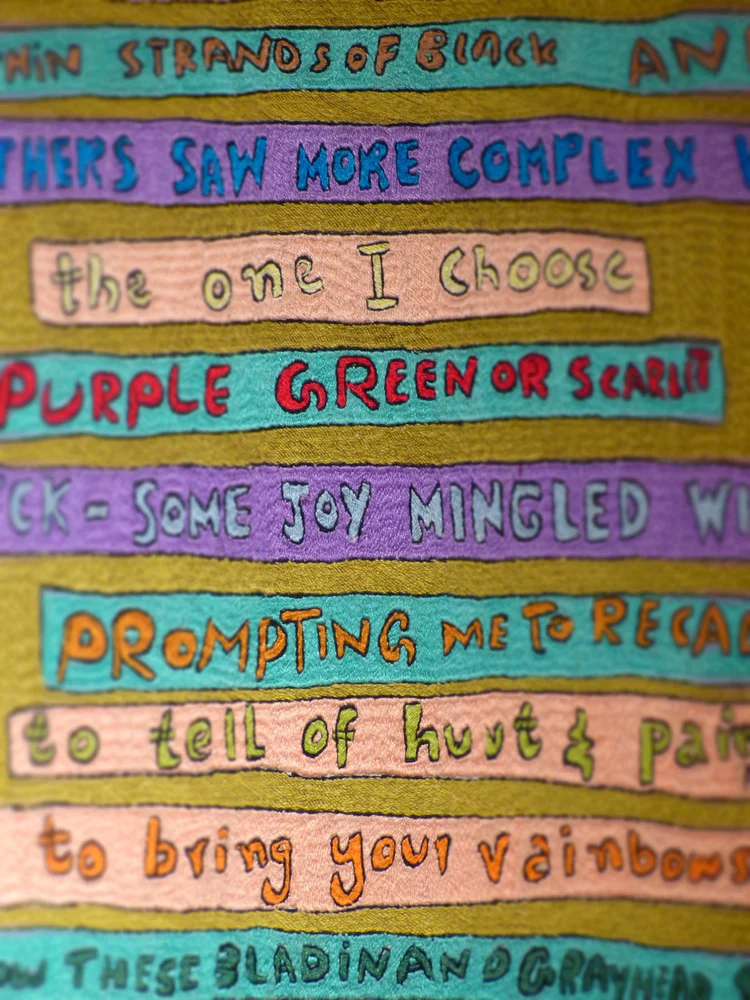
Weaving Songs (Donald S Murray), Adil Iqbal, Hand embroidery on Calico |
|
|
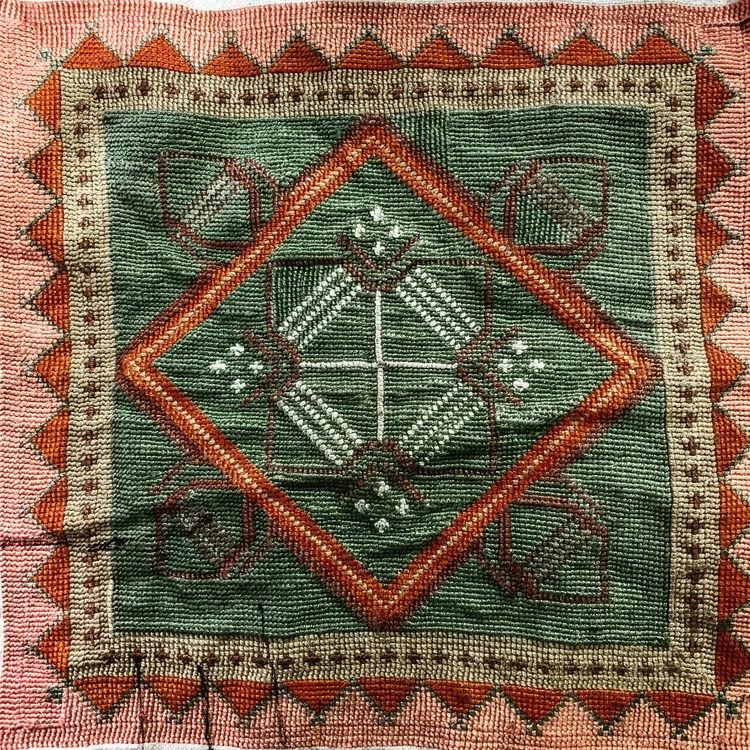
Exploring the Beauty and Aesthetics of Chitrali Embroidery Dive into the rich tapestry of Chitrali embroidery, where ancient silk routes meet the artistry of Central Asia. Discover how each stitch tells a story of heritage, womanhood, and love, woven through the traditions of this remote Hindukush valley. From royal patronage to intimate bridal gifts, Chitrali embroidery is more than a craft—it's a cultural treasure. Join us in the next Peristan Journal as we explore the vibrant patterns, poetic histories, and timeless beauty of this captivating art form.
|
|
|
|
Tha ishqa kamar boti tha ghama girifthar Ma ashru mukhodoko kishtian aliftar The day I fell in love with you, I became bound by sorrows and griefs; My tears run down my cheeks like the lines of alif tar (embroidery of lines). |
|
|
|
PERISTAN a tapestry, woven of wild dreams no rules, no themes, where beauty blooms in surprise crafted with love, whispered in art's embrace
|
|
Twitter Instagram Facebook info@twillingtweeds.com
|
|
|
|